

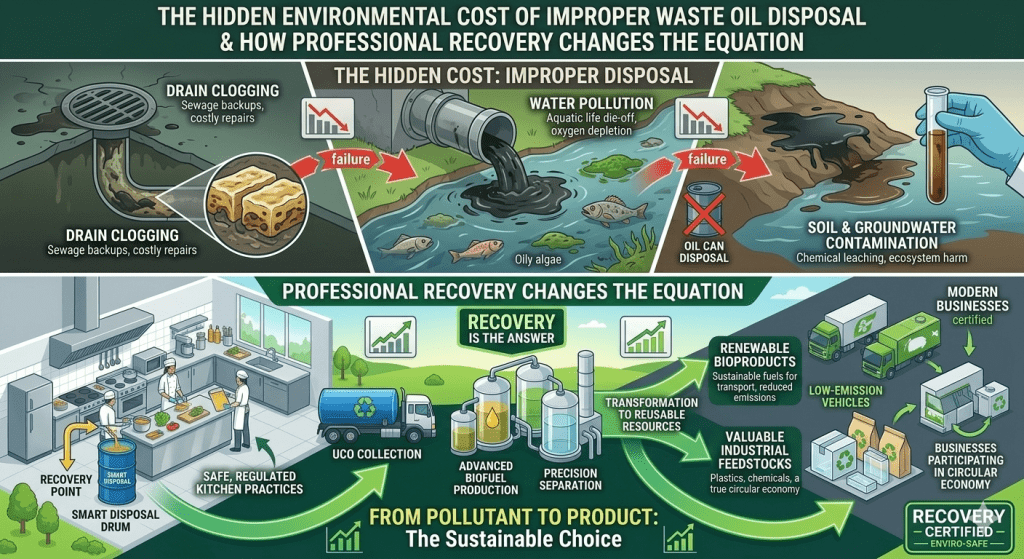
The Hidden Environmental Cost of Improper Waste Oil Disposal and How Professional Recovery Changes the Equation
Industrial progress relies heavily on lubricants, fuels, and oils that keep machinery operating efficiently. From manufacturing facilities and automotive workshops to marine operations and large commercial kitchens, oil plays a critical role in everyday operations. However, once oil becomes contaminated or degraded, it transforms into a hazardous waste stream that requires specialized handling. The removal of waste oil is not simply a disposal task. It is a technical environmental management process that directly impacts ecosystems, regulatory compliance, and long term sustainability.
Organizations that overlook the complexities of waste oil management often expose themselves to environmental liability and operational risk. Professional waste oil recovery services provide a structured solution that protects both the environment and the businesses that generate this waste.
Understanding Waste Oil as a Complex Industrial Byproduct
Waste oil is often misunderstood as a simple liquid waste. In reality, it is a mixture that can contain heavy metals, chemical residues, combustion byproducts, and other contaminants accumulated during industrial use. Engine oil, hydraulic fluid, transformer oil, compressor lubricants, and cooking oils can all become waste oils once they lose their functional properties.
Improper disposal practices such as dumping oil into drains, landfills, or soil can have severe consequences. A single gallon of used oil has the potential to contaminate a vast amount of water if it reaches natural waterways. Soil contamination from oil waste can also persist for years, disrupting microbial ecosystems and plant growth.
This is why the removal of waste oil must be approached through specialized recovery systems designed to safely extract, transport, and process these materials.
Why Waste Oil Removal Requires Specialized Infrastructure
The logistics behind waste oil recovery are far more complex than standard waste collection. Facilities that generate used oil require scheduled extraction using specialized containment equipment. Storage tanks, oil interceptors, and collection drums must be managed carefully to prevent leakage or overflow.
Professional recovery teams employ vacuum pumping systems, sealed transport containers, and certified transfer protocols to ensure that oil is handled safely from the point of collection to processing facilities. These processes are designed to eliminate environmental exposure while maintaining strict documentation for regulatory purposes.
At Rogue Waste Recovery, we focus on structured collection systems that allow businesses to manage oil waste efficiently without disrupting daily operations.
The Circular Economy Opportunity Within Waste Oil
One of the most overlooked aspects of waste oil management is its potential for resource recovery. Used oil does not necessarily lose its value once it becomes contaminated. Through advanced re refining technologies, waste oil can be processed and converted back into usable base oils, fuels, or industrial feedstocks.
This transformation allows waste oil to re enter the supply chain rather than becoming a pollutant. In many cases, recycled oil products require significantly less energy to produce compared to manufacturing new lubricants from crude oil.
By supporting responsible recovery systems, businesses contribute to a circular industrial economy where materials are reused rather than discarded.
Environmental Risks of Informal Disposal Practices
In some regions, businesses attempt to manage waste oil through informal disposal channels. This may involve unlicensed collectors, improper storage, or uncontrolled dumping. While such practices may appear cost effective in the short term, they create substantial long term risks.
Environmental contamination can trigger expensive cleanup operations, regulatory fines, and reputational damage. Additionally, unregulated disposal often leads to oil entering stormwater systems, rivers, and coastal environments where it harms aquatic life.
Proper waste oil removal services eliminate these risks by ensuring that every stage of handling meets environmental safety standards.
The Role of Documentation and Regulatory Compliance
Environmental authorities in many jurisdictions require strict record keeping for hazardous waste management. Businesses that generate waste oil are often required to maintain documentation detailing how the oil was stored, transported, and processed.
Professional recovery providers assist clients by maintaining detailed service records, collection logs, and compliance documentation. This administrative layer ensures that organizations can demonstrate responsible waste management during inspections or environmental audits.
By partnering with Rogue Waste Recovery, we help businesses maintain traceable waste management processes that align with environmental compliance expectations.
Preventing Infrastructure Damage Through Proper Oil Removal
Waste oil accumulation does not only create environmental concerns. It can also damage operational infrastructure. Facilities that fail to remove waste oil regularly may experience clogged interceptors, tank corrosion, and leakage from aging storage containers.
Oil residue buildup in drainage systems can reduce flow capacity and increase maintenance costs. Over time, these issues can disrupt facility operations and create safety hazards for employees.
Routine waste oil extraction prevents these problems by maintaining clean containment systems and ensuring that oil storage equipment remains within safe operating limits.
Waste Oil Management as a Sustainability Strategy
Many organizations now include environmental responsibility within their corporate strategy. Waste oil recovery provides a measurable way to reduce environmental impact while demonstrating commitment to sustainable practices.
Recovering used oil reduces the need for new petroleum extraction and minimizes environmental pollution. Businesses that integrate responsible waste management into their operational policies also strengthen their environmental reporting and sustainability metrics.
Professional recovery programs allow organizations to turn a potential environmental liability into a responsible resource management strategy.
Building Long Term Partnerships for Responsible Waste Handling
Effective waste oil management is not a one time activity. It requires ongoing monitoring, regular collection schedules, and adaptive solutions as operational needs evolve. Businesses benefit from working with waste recovery specialists who understand the technical requirements of oil waste handling across different industries.
Through structured service plans, facility assessments, and responsive collection systems, organizations can maintain consistent waste oil removal without operational interruptions.
Rogue Waste Recovery supports businesses by providing reliable oil recovery services that prioritize environmental safety and operational efficiency.
Waste oil is one of the most common yet potentially harmful industrial byproducts. Without proper management, it can contaminate soil, pollute waterways, and expose businesses to regulatory risks. Professional waste oil removal provides the expertise, infrastructure, and environmental safeguards necessary to manage this material responsibly.
Through systematic collection, safe transportation, and resource recovery processes, waste oil can be transformed from a hazardous waste stream into a valuable resource within the circular economy.
By working with Rogue Waste Recovery, we help organizations ensure that their waste oil is handled safely, responsibly, and in a way that protects both the environment and long term operational sustainability.