

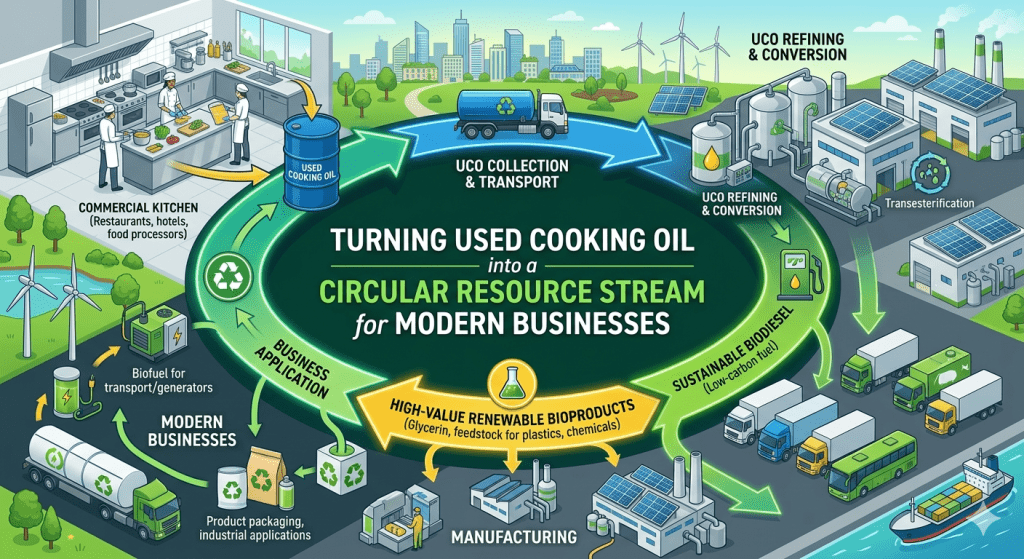
Turning Used Cooking Oil into a Circular Resource Stream for Modern Businesses
Commercial kitchens, food production facilities, and hospitality operations generate significant volumes of used cooking oil every day. What many businesses overlook is that this material is not simply waste. When handled strategically, it becomes part of a circular resource system that benefits the environment, reduces operational risk, and creates value across multiple industries.
Used oil pickup services have evolved far beyond basic waste collection. Today they are part of a structured sustainability infrastructure that supports renewable fuel production, regulatory compliance, and cleaner commercial operations. For restaurants, caterers, food processors, and institutional kitchens, proper oil management has become an essential operational component.
The Hidden Environmental Impact of Improper Oil Disposal
Improper disposal of cooking oil remains a major environmental issue. When oil enters drainage systems it solidifies and accumulates inside pipes. This causes severe blockages that lead to sewage overflows, costly plumbing repairs, and contamination of local waterways.
A single gallon of cooking oil can contaminate thousands of gallons of water if disposed of incorrectly. This pollution damages ecosystems, harms aquatic life, and increases the burden on municipal wastewater treatment systems.
Professional used oil pickup prevents these issues by ensuring that oil is stored, transported, and processed in a controlled and compliant manner. Instead of becoming pollution, the material becomes a valuable feedstock for renewable products.
Used Oil as a Renewable Energy Resource
One of the most remarkable transformations in waste management is the conversion of used cooking oil into renewable fuels. Through advanced refining processes, collected oil can be processed into biodiesel and renewable diesel. These fuels significantly reduce greenhouse gas emissions compared to traditional petroleum diesel.
Businesses that participate in structured used oil pickup programs indirectly contribute to cleaner transportation systems. Trucks, buses, and industrial equipment powered by biofuels often rely on recycled cooking oil as a primary raw material.
This transformation highlights an important shift in waste thinking. Materials that once created disposal challenges are now recognized as valuable inputs within the renewable energy economy.
Operational Efficiency Through Structured Oil Management
For commercial kitchens, managing used oil internally can quickly become a logistical burden. Containers overflow, storage areas become messy, and staff members must constantly monitor disposal procedures.
A professional pickup system eliminates these challenges. Scheduled collections ensure containers are emptied before reaching capacity. Secure storage units prevent spills and odors. Routine service removes uncertainty from daily operations.
Businesses benefit from improved workplace safety as well. Oil spills on kitchen floors can create hazardous slip conditions. Structured collection systems significantly reduce these risks and maintain cleaner kitchen environments.
Supporting Compliance with Local Regulations
Waste disposal regulations are becoming increasingly strict across municipalities and environmental agencies. Businesses are expected to document how they handle cooking oil and demonstrate that it is disposed of through approved channels.
Professional used oil pickup services provide traceable handling procedures that help businesses remain compliant with environmental regulations. Documentation, proper storage equipment, and certified transport all contribute to regulatory peace of mind.
By partnering with an experienced recovery provider such as Rogue Waste Recovery, businesses ensure that their waste management practices align with modern environmental standards.
The Economics of Waste Oil Recovery
Many operators assume that used oil management only adds operational costs. In reality, structured recovery systems can improve financial outcomes for food service businesses.
Collected oil has commodity value because it can be refined into renewable fuels and industrial products. Some recovery programs provide financial incentives or cost reductions depending on oil volume and quality.
In addition, businesses avoid expenses associated with plumbing damage, sewer blockages, and regulatory penalties. Preventing a single major grease-related plumbing repair can offset months or even years of proper oil management service.
Technology Improving the Collection Process
The used oil recovery sector has adopted advanced technology to make collection safer and more efficient. Modern storage tanks include sealed lids, pump based extraction systems, and spill prevention features.
These innovations eliminate the need for manual oil handling. Staff members no longer need to lift heavy containers or pour oil into open bins. Instead, oil is transferred directly from fryers into secure storage units designed specifically for commercial environments.
During pickup, specialized vacuum trucks extract the oil quickly without disrupting kitchen operations. This technology reduces service time and maintains a clean working environment for businesses.
Building a Circular Supply Chain
A key benefit of professional used oil pickup is its role in supporting circular supply chains. Instead of sending waste to landfills or sewer systems, the oil is reintegrated into productive industries.
Collected oil can be processed into:
• Biodiesel and renewable diesel fuels
• Industrial lubricants
• Animal feed additives after proper treatment
• Raw materials for chemical manufacturing
This closed loop model reduces the need for virgin resources and decreases the environmental footprint of multiple industries simultaneously.
Risk Reduction for Food Service Businesses
Improper oil storage can lead to a range of operational risks. Containers placed outdoors may attract pests or create unpleasant odors. Unsecured bins can also be targets for illegal oil theft, which has become a growing issue in some regions due to the rising value of recycled oil.
Structured used oil pickup programs address these vulnerabilities through secure containers, scheduled servicing, and monitored collection processes. Businesses maintain control over their waste streams while ensuring the material reaches legitimate recycling facilities.
Creating Sustainable Brand Value
Consumers increasingly evaluate restaurants and food brands based on their sustainability practices. Waste reduction, recycling initiatives, and responsible resource management contribute to a stronger brand image.
Businesses that implement structured used oil recovery programs can confidently demonstrate environmental responsibility. This commitment resonates with environmentally conscious customers and strengthens long term brand credibility.
Sustainability efforts that once remained behind the scenes are now becoming visible components of modern brand identity.
The Strategic Role of Professional Oil Recovery
Used cooking oil management is no longer a minor operational detail. It is a strategic element of environmental compliance, operational efficiency, and sustainability planning.
Professional pickup services ensure that oil is safely removed, responsibly recycled, and redirected into valuable production streams. Businesses gain cleaner kitchens, reduced environmental risk, and improved regulatory compliance.
At the same time, the collected material contributes to renewable energy systems and circular economic models that benefit society as a whole.
Through structured recovery programs such as those provided by Rogue Waste Recovery, commercial kitchens can transform a routine waste product into a meaningful environmental solution.