

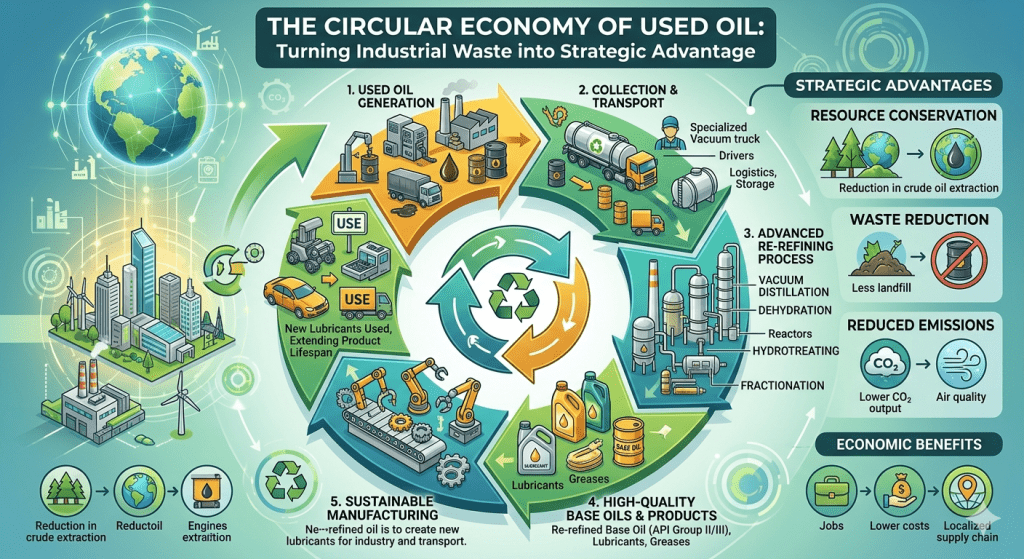
The Circular Economy of Used Oil: Turning Industrial Waste into Strategic Advantage
In today’s resource-conscious economy, waste is no longer just something to dispose of. It is an opportunity to recover value, reduce environmental impact, and build smarter operational systems. Used oil, often overlooked as a routine byproduct, sits at the center of this transformation. Through advanced recycling practices, what was once considered hazardous waste can be refined, repurposed, and reintroduced into the supply chain.
At Rogue Waste Recovery, we approach used oil recycling not as a basic service, but as a strategic process that benefits businesses, communities, and the environment simultaneously.
Rethinking Used Oil as a Resource
Used oil is generated across industries including automotive, manufacturing, transportation, and energy. Traditionally, improper disposal led to soil contamination, water pollution, and regulatory risks. However, modern recycling technologies have redefined its lifecycle.
Instead of treating used oil as an endpoint, we view it as a renewable resource. When collected and processed correctly, it can be re-refined into lubricants, converted into fuel oils, or used as raw material in industrial applications. This shift aligns with circular economy principles where materials are continuously reused rather than discarded.
The Hidden Cost of Inefficient Disposal
Many organizations underestimate the operational and financial risks tied to improper oil disposal. Beyond environmental damage, businesses face:
• Regulatory penalties and compliance violations
• Increased liability exposure
• Loss of recoverable material value
• Inefficient waste management workflows
A fragmented disposal approach often leads to higher long term costs. By contrast, a structured recycling system integrates waste management into core operations, improving efficiency and accountability.
Engineering a Closed Loop System
A truly effective used oil recycling service is not just about collection. It is about building a closed loop system that ensures traceability, compliance, and resource recovery at every stage.
We implement a structured approach that includes:
1. Precision Collection and Segregation
Proper handling begins at the source. We ensure used oil is collected without contamination, preserving its potential for high quality reprocessing.
2. Safe Transportation and Handling
Transporting used oil requires adherence to strict safety and environmental standards. Our logistics framework minimizes risk while maintaining full regulatory compliance.
3. Advanced Re Refining Processes
Through modern re refining techniques, used oil is restored to a condition comparable to virgin oil. This significantly reduces the need for crude oil extraction.
4. Reintegration into the Supply Chain
The final step is reintroducing refined oil into industrial use, completing the cycle and reducing dependency on new resources.
Environmental Impact Beyond Compliance
Recycling used oil delivers measurable environmental benefits that go far beyond regulatory requirements:
• One gallon of used oil can be re refined into usable lubricants, conserving natural resources
• Reduced greenhouse gas emissions compared to producing oil from crude sources
• Prevention of water contamination, where even small quantities of oil can pollute large volumes of water
• Lower landfill and hazardous waste accumulation
By adopting a structured recycling program, businesses contribute to a broader sustainability framework while strengthening their own environmental credentials.
Data Driven Waste Management
One of the most overlooked aspects of used oil recycling is data visibility. Without proper tracking, companies lack insight into waste generation patterns and optimization opportunities.
We integrate reporting and analytics into our service model, enabling businesses to:
• Monitor volumes of used oil generated and recycled
• Identify inefficiencies in equipment or processes
• Improve forecasting and inventory management
• Strengthen compliance documentation
This data driven approach transforms waste management from a reactive task into a proactive strategy.
Industry Applications and Customization
Used oil recycling is not a one size fits all service. Different industries require tailored solutions based on operational scale, regulatory requirements, and waste composition.
We work across sectors including:
• Automotive service centers managing high frequency oil changes
• Manufacturing facilities with complex machinery lubrication systems
• Fleet operators optimizing maintenance and fuel efficiency
• Industrial plants requiring large scale waste handling
Each solution is customized to align with operational workflows while maximizing recovery and minimizing disruption.
Building Long Term Value Through Sustainability
Sustainability is no longer just a branding exercise. It is a core business driver influencing investor decisions, customer trust, and regulatory positioning.
By integrating used oil recycling into operational strategy, companies can:
• Enhance ESG performance metrics
• Reduce overall environmental footprint
• Strengthen brand reputation
• Improve cost efficiency through resource recovery
At Rogue Waste Recovery, we position sustainability as a measurable outcome, not just an intention.
The Future of Used Oil Recycling
The future of waste management is moving toward greater automation, higher recovery rates, and deeper integration with industrial systems. Innovations such as AI driven waste tracking, improved refining technologies, and decentralized recycling models are reshaping the landscape.
Businesses that adopt forward thinking recycling strategies today will be better positioned to adapt to evolving regulations and market expectations.
Used oil recycling is no longer a routine compliance task. It is a strategic function that connects environmental responsibility with operational efficiency and economic value.
By implementing a structured, data driven, and sustainability focused approach, organizations can transform waste into opportunity. Rogue Waste Recovery delivers this transformation through precision, reliability, and innovation, helping businesses close the loop and move toward a more resilient future.